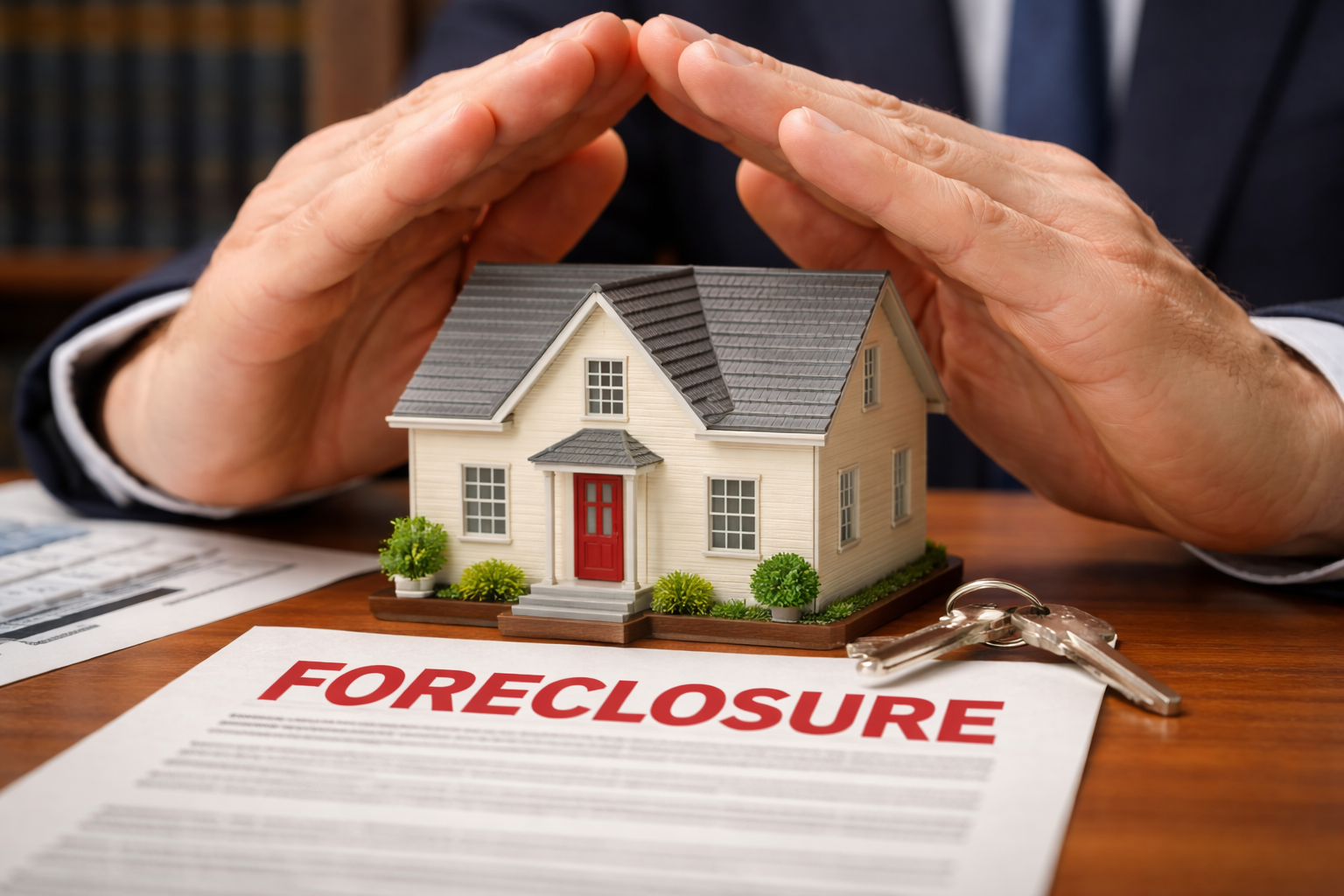

Receiving a foreclosure notice is terrifying. Your home—the place where your family lives, where your children sleep, where you’ve built your life—is at risk. If you’re facing foreclosure in Las Vegas or anywhere in Nevada, you’re probably wondering: can bankruptcy save my home?
The answer is yes, bankruptcy can stop foreclosure. But the details matter and acting quickly is crucial. At Riggs Law Firm, we help Nevada homeowners stop foreclosure and keep their homes through strategic use of bankruptcy law.
Understanding Nevada’s Foreclosure Process
Nevada is primarily a non-judicial foreclosure state, which means lenders can foreclose without going to court. This makes the process faster than in many other states, giving homeowners less time to respond.
The Nevada Foreclosure Timeline:
Once you’re 120 days behind on mortgage payments, your lender can begin foreclosure proceedings:
- Notice of Default and Election to Sell: The lender records this with the county and sends you a copy. This gives you at least 90 days before the foreclosure sale.
- Notice of Trustee’s Sale: At least 20 days before the sale, the lender publishes notice of the sale date and sends you notification.
- Foreclosure Sale: Your home is sold at a public auction to the highest bidder.
From the first missed payment to losing your home can take 7-9 months in Nevada—much faster than many states. This compressed timeline makes it critical to act quickly if you want to save your home.
How Bankruptcy Stops Foreclosure
When you file for bankruptcy, the automatic stay immediately halts all collection activities, including foreclosure proceedings. The scheduled foreclosure sale cannot go forward while the automatic stay is in effect.
Even if the foreclosure sale is scheduled for tomorrow, filing bankruptcy today will stop it.
The automatic stay is a federal court order, and it’s powerful. Your mortgage company must stop the foreclosure process immediately, even if the sale is literally hours away.
However, the automatic stay is temporary. What happens next depends on which type of bankruptcy you file and your specific situation.
Chapter 13: The Best Option for Saving Your Home
If you want to keep your home and you’re behind on mortgage payments, Chapter 13 bankruptcy is typically your best option.
How Chapter 13 Saves Your Home:
Chapter 13 allows you to catch up on missed mortgage payments over 3-5 years through a court-approved repayment plan. Here’s how it works:
- You file Chapter 13 bankruptcy, immediately stopping the foreclosure
- You propose a repayment plan to the court
- You resume making your regular monthly mortgage payment going forward
- You make an additional monthly payment through the bankruptcy plan to catch up on the arrears
- After completing the plan (3-5 years), you’re current on your mortgage and keep your home
Example: Let’s say you’re $15,000 behind on your mortgage, and your regular payment is $1,800/month. In Chapter 13, you would:
- Propose a plan that pays $1,800/month to your lender
- Pay approximately $300/month through your Chapter 13 plan for 5 years to catch up on the $15,000 arrears
- After 5 years, you’re completely current and keep your home
Additional Benefits of Chapter 13:
Chapter 13 can also help with second mortgages. If your home is worth less than what you owe on your first mortgage, you may be able to “strip off” the second mortgage entirely, treating it as unsecured debt that gets discharged in bankruptcy.
For example, if you owe $400,000 on your first mortgage and $50,000 on a second mortgage, but your home is only worth $380,000, the second mortgage is completely unsecured and can potentially be eliminated.
Chapter 7: Limited Help for Foreclosure
Chapter 7 bankruptcy can provide temporary relief from foreclosure, but it’s not a long-term solution if you’re behind on payments.
What Chapter 7 Can Do:
- Stop the foreclosure temporarily (usually 3-4 months while your case is pending)
- Eliminate other debts (credit cards, medical bills, personal loans), freeing up money to pay your mortgage
- Discharge any deficiency judgment if your home is eventually foreclosed
What Chapter 7 Cannot Do:
- Eliminate your mortgage debt if you want to keep the home
- Help you catch up on missed payments
- Provide a long-term solution if you’re behind on your mortgage
When Chapter 7 Makes Sense:
Chapter 7 is useful for homeowners who:
- Are current on their mortgage but drowning in other debt
- Want to eliminate other debts to free up money for mortgage payments
- Need time to sell the home themselves rather than losing it to foreclosure
- Have decided to surrender the home but want to avoid a deficiency judgment
What If the Foreclosure Sale Already Happened?
Once your home has been sold at foreclosure, bankruptcy cannot get it back. However, Nevada law gives you some important protections even after the sale.
In Nevada, you generally cannot be held personally liable for a deficiency (the difference between what you owed and what the home sold for) on a purchase money mortgage for your primary residence. This means if you bought your home with a mortgage and lived there, the lender cannot sue you for the shortfall after foreclosure.
However, you may still face deficiency liability for:
- Refinanced mortgages
- Home equity loans or lines of credit
- Second homes or investment properties
Filing bankruptcy after foreclosure can eliminate any remaining deficiency liability and give you a fresh start. Learn more about rebuilding your credit after bankruptcy.
Special Considerations for Las Vegas Homeowners
The Las Vegas Housing Market:
Las Vegas has experienced significant housing market volatility over the past 15 years. Many homeowners who purchased at the market peak or refinanced during the boom found themselves underwater (owing more than the home is worth) after the crash.
While home values have recovered substantially, many Las Vegas homeowners still face challenges:
- Second mortgages or home equity lines taken out when values were higher
- Job loss or income reduction in the hospitality and service industries
- Fluctuating income from tips or seasonal work
Nevada’s Homestead Exemption:
Nevada offers one of the most generous homestead exemptions in the country: $605,000 in equity protection for your primary residence. This means if you have equity in your home, you can protect up to $605,000 of it in bankruptcy.
This exemption makes Chapter 7 bankruptcy viable for many Las Vegas homeowners who have equity but need to eliminate other debts. You can keep your home in Chapter 7 as long as you’re current on payments and your equity is within the exemption limit.
Loan Modifications and Bankruptcy
Sometimes combining bankruptcy with a loan modification offers the best path forward. Lenders are often more willing to negotiate a loan modification when you’re in bankruptcy because they know you have options.
A loan modification can:
- Reduce your interest rate
- Extend the loan term
- Add missed payments to the end of the loan
- In some cases, reduce the principal balance
At Riggs Law Firm, we can help you pursue a loan modification while simultaneously protecting you through bankruptcy.
Timeline: How Quickly Must You Act?
Before the Foreclosure Notice: If you’re just falling behind but haven’t received foreclosure paperwork, you have more options. This is the best time to explore bankruptcy and other alternatives.
After Receiving the Notice of Default: You have at least 90 days before the sale. This is enough time to carefully consider your options, but don’t wait too long.
Weeks Before the Sale: You can still file bankruptcy and stop the sale, but you’ll have less time to prepare a comprehensive strategy.
Days Before the Sale: We can file an emergency bankruptcy petition to stop a foreclosure sale at the last minute, even the day before or the morning of the sale.
The Day of the Sale: As long as the sale hasn’t actually occurred, bankruptcy will stop it. But this is cutting it extremely close and should only be a last resort.
Your Rights During Foreclosure
Nevada law provides important protections for homeowners facing foreclosure:
- Mediation Program: The Bankruptcy Court’s Mediation Program may give you the right to mediation with your lender, though this program has specific eligibility requirements and deadlines.
- Notice Requirements: Lenders must provide proper notice at each stage of foreclosure. Failure to follow these requirements can be grounds to challenge the foreclosure.
- Right to Reinstate: Before the sale, you have the right to reinstate your mortgage by paying all missed payments, plus fees and costs.
Common Mistakes Homeowners Make
- Ignoring the Problem: Hoping the foreclosure will go away or that you’ll figure something out at the last minute rarely works. The sooner you address the situation, the more options you have.
- Falling for Foreclosure Rescue Scams: Beware of companies that promise to save your home for an upfront fee. Many are scams. Always work with a licensed attorney.
- Not Communicating with Your Lender: While lenders can be difficult to work with, staying in contact and documenting your communications is important.
- Waiting Too Long to Get Legal Help: Bankruptcy is most effective when you have time to plan your strategy, not when you’re filing an emergency petition hours before the sale.
How Riggs Law Firm Helps Save Homes
When you’re facing foreclosure, you need an experienced bankruptcy attorney who understands Nevada law and acts quickly. At Riggs Law Firm, we:
- Act Fast: We can file emergency bankruptcy petitions to stop foreclosure sales, even at the last minute.
- Create Custom Strategies: We analyze your complete financial situation to determine whether Chapter 7, Chapter 13, loan modification, or a combination approach works best.
- Handle Everything: We prepare all paperwork, communicate with your lender, represent you in court, and guide you through every step.
- Protect Your Rights: We ensure your lender follows proper procedures and explore every option to save your home.
- Plan Long-Term: We don’t just stop the foreclosure—we help you create a sustainable path to keeping your home for the long term.
Take Action Now
If you’re facing foreclosure in Las Vegas, Henderson, or anywhere in Nevada, don’t wait. Every day matters, and you have more options than you might think.
Bankruptcy isn’t about giving up on your home—it’s about using powerful legal tools to protect it and give your family stability. Whether you need Chapter 13 to catch up on payments or want to understand all your debt relief options, we’re here to help.
Your home is worth fighting for. Contact Riggs Law Firm today for a free consultation. Call 702-605-5070 or schedule online. We’ll review your situation, explain your options, and help you take immediate action to stop foreclosure.
You don’t have to lose your home. Let us help you fight back.
This article provides general information about bankruptcy and foreclosure in Nevada and does not constitute legal advice. Every homeowner’s situation is unique. Contact Riggs Law Firm for personalized legal guidance on your specific circumstances.