


Table of Contents
- What a Chapter 7 Discharge Actually Means
- Is Chapter 7 Bankruptcy Discharge Permanent?
- What Debts Are Not Dischargeable in Chapter 7
- How Long Does Bankruptcy Affect Your Credit Score?
- What Happens After Discharge: Protecting Your Fresh Start
- Discharge vs. Dismissal: What’s the Difference?
- When a Discharge Can Be Revoked
- Conclusion
- Frequently Asked Questions
Last Updated: October, 2026
What a Chapter 7 Discharge Actually Means
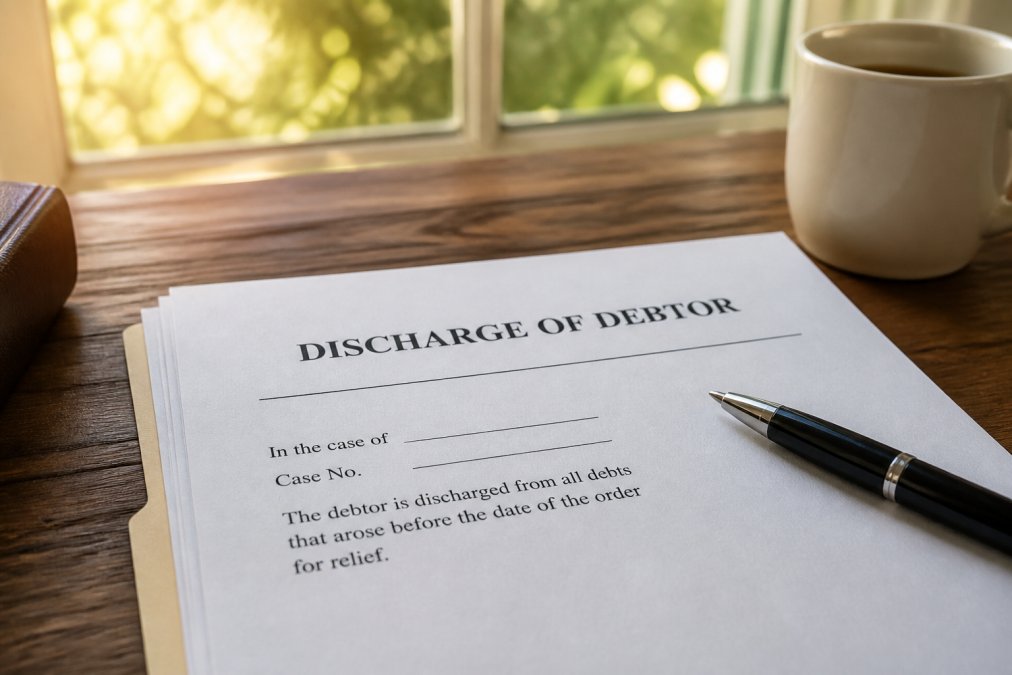
A Chapter 7 discharge is a court order that permanently eliminates your personal liability for most unsecured debts. Once the bankruptcy court grants it, creditors named in your petition can no longer collect those debts from you, and they cannot sue you over them.
This guide from Riggs Law Firm explains what the discharge does, what it does not cover, and when it can be taken away.
The discharge order arrives after the bankruptcy trustee completes the liquidation process, which typically means selling non-exempt assets to pay creditors what the bankruptcy estate can afford. Most Chapter 7 cases involve few or no assets to sell, so the trustee’s role often ends with reviewing your petition and confirming there is nothing to distribute.
That order is the payoff. It is also narrower than most people expect.
Is Chapter 7 Bankruptcy Discharge Permanent?
Yes. Is Chapter 7 bankruptcy discharge permanent? For the debts it covers, the answer is yes: the discharge is permanent and cannot be undone by a creditor, and you do not need to renew it.
That permanence has two limits worth understanding before you rely on it.
First, the discharge applies only to debts that existed on your filing date and that the bankruptcy code allows to be discharged. A debt you take on after filing is yours, full stop. Second, the discharge is permanent unless a creditor successfully asks the court to revoke it, which is rare but possible.
A common mistake is assuming the discharge wipes your credit report clean. It does not. The discharge is a legal event; your credit report is a separate record that keeps its own timeline. More on that below.
What Debts Are Not Dischargeable in Chapter 7
Some debts survive Chapter 7 no matter how the case ends. These are called non-dischargeable debts, and they remain your personal liability after the discharge order is entered.
The most common categories include:
- Tax debt, with narrow exceptions for certain older income tax obligations
- Student loans, absent a separate showing of undue hardship through an adversary proceeding
- Alimony and child support
- Debts from fraud, theft, or willful injury
- Court fines, penalties, and restitution
The distinction matters because non-dischargeable debts do not disappear from your credit report or your life. A creditor holding one can keep pursuing collection action after your case closes, and the automatic stay lifts when the case ends.
If you are carrying significant student loan debt alongside credit card balances, the credit cards may be discharged while the student loans remain. That is not a reason to skip filing, but it is a reason to plan around what stays.
How Long Does Bankruptcy Affect Your Credit Score?
A Chapter 7 filing stays on your credit report for ten years from the filing date. How long does bankruptcy affect your credit score in practice? The reporting window is fixed, but the practical impact fades well before the ten-year mark for most filers.
Two things drive your recovery: what you do after discharge, and whether you keep new accounts current. A car loan or secured credit card paid on time for a year does more for your score than waiting out the reporting clock.
The common advice to avoid all credit after bankruptcy is outdated. Lenders want to see active, on-time payment history. Going dormant for years leaves you with nothing new to report.
Pull your credit reports directly from each bureau after your discharge and dispute any account still showing a balance that was discharged. Furnishers sometimes miss the update, and a stale balance can drag your file down for months.
What Happens After Discharge: Protecting Your Fresh Start
The discharge injunction is a permanent court order that bars creditors from collecting discharged debts. It is enforceable, and the enforcement mechanism is a motion for contempt filed in the same bankruptcy case. Most guides stop at “the debt is gone.” This section covers what to do when a creditor does not get the message.
Here is what to do in the weeks after your discharge order arrives:
- Save a copy of the discharge order somewhere you can find it fast
- Review all three credit reports for accounts still showing balances
- Dispute any discharged debt reported as owed
- Log every contact from a creditor, including dates, names, and what was said
- Forward collection letters to your attorney before responding
When a creditor violates the discharge injunction. Post-discharge creditor harassment is more common than most guides admit. A debt buyer that purchased your old account may not have received notice of the discharge, or may simply ignore it. The pattern is familiar: a collection letter arrives, then a phone call, then a threat to sue on a debt that no longer exists.
You have recourse. The discharge injunction is enforceable through a motion for contempt under the court’s authority to enforce its own orders. If the court finds a willful violation, it can:
- Hold the creditor in civil contempt
- Award actual damages, including emotional distress in some circuits
- Award attorney’s fees and costs
- Impose a coercive sanction to stop the conduct
- In egregious cases, refer the matter for criminal contempt
The key word is willful.
If a creditor contacts you after discharge, do not argue the merits of the debt. State that the debt was discharged, note the date and time, and refer the caller to your attorney. Then send a written notice to the creditor’s compliance address with a copy of the discharge order.
Discharge injunction and contempt remedies
Discharge vs. Dismissal: What’s the Difference?
A discharge and a dismissal are opposite outcomes, and confusing them is one of the costliest mistakes a filer can make.
The difference in consequences is severe:
| Outcome | What It Means | Typical Cause | Effect on Debts |
|---|---|---|---|
| Discharge | Case completed, debts eliminated | Requirements met | Most unsecured debt gone |
| Dismissal | Case closed, no relief granted | Missed course, missed payment, missing documents | Debts remain owed |
When a Discharge Can Be Revoked
A discharge is permanent, but it is not unconditional. Federal bankruptcy law allows a creditor, the trustee, or the United States Trustee to ask the court to revoke a discharge, and the grounds and deadlines are set out in the Bankruptcy Code. This is the angle most articles skip, and it is where the word “permanent” earns its asterisk.
- Obtained the discharge through fraud
- Failed to disclose property of the estate, or concealed assets
- Made a false oath or account during the case
- Withheld documents from the trustee
- Failed to explain a loss of assets satisfactorily
- Refused to obey a lawful court order
- Received a discharge in an earlier case within the statutory waiting period
- Revocation is rare, but it is real. Most cases close without any challenge. The ones that do not almost always trace back to something that happened during the case, not after it.
- The trigger is usually disclosure, not repayment. Leaving an asset off Schedule A/B, understating income on Schedule I, or transferring property to a relative before filing are the patterns that draw revocation complaints.
- A reopened case is the mechanism. If undisclosed property surfaces years later, the trustee can move to reopen the case, administer the asset, and seek revocation. The discharge does not insulate conduct that was concealed from the court.
- The burden is on the movant. A creditor cannot revoke a discharge just because it dislikes the outcome. It has to prove one of the statutory grounds by a preponderance of the evidence.
Never leave an asset off your petition to “protect” it. Undisclosed property is the most common trigger for revocation, and the court can reopen the case years later if it surfaces. Full, accurate disclosure in your petition matters more than any other single step.
A discharge is permanent against your creditors, but it is not permanent against your own misconduct. The conduct that revokes a discharge happens before the order is entered, not after.
11 U.S.C. § 727, Discharge
Conclusion
The discharge is the goal of every Chapter 7 case, and for most filers it delivers exactly what it promises: a permanent end to personal liability on eligible debts. The parts that trip people up are the edges, the debts that survive, the credit reporting that outlasts the legal relief, and the rare cases where a discharge is challenged.
Frequently Asked Questions
How long does Chapter 7 stay on your credit report?
A Chapter 7 bankruptcy typically remains on your credit report for 10 years from the filing date. However, its impact lessens over time, and many people begin rebuilding credit within 2-3 years. The discharge itself is permanent, but the credit reporting timeframe is separate.
What not to do after Chapter 7 discharge?
After discharge, avoid taking on new debt you can’t afford, missing payments on reaffirmed debts, or failing to update your credit report. Also, don’t ignore any post-discharge collection attempts; if a creditor tries to collect a discharged debt, that may violate the discharge injunction and you should consult an attorney.
Will my credit score go up after Chapter 7 discharge?
It can, but not immediately. Discharge eliminates debt, which may improve your debt-to-income ratio. However, the bankruptcy notation remains. With responsible credit habits, many see improvement within a year or two. Checking your credit report for errors is a good first step.
Can a creditor still collect a debt after a discharge is granted?
No. Once a debt is discharged, the creditor can no longer collect it. If they try, they may be held in contempt of court for violating the discharge injunction. You should keep your discharge order and contact a bankruptcy attorney if harassment occurs.
What is the difference between a bankruptcy dismissal and a discharge?
A dismissal ends your bankruptcy case without eliminating debts, often because you missed payments or failed to meet requirements. A discharge, however, permanently eliminates your personal liability for most debts. Dismissal leaves you where you started, while discharge provides a fresh start.