


Most bankruptcy attorneys prepare clients for the 341 Meeting of Creditors by spending a few minutes explaining what to expect. I prepare clients differently — by spending time pretending to be the trustee, running the same 341 meeting of creditors questions they will face in court.
I am Dan Riggs, the founder of Riggs Law Firm in the Las Vegas area. For more than fifteen years, I represented a chapter 13 bankruptcy trustee. During that time, I personally conducted thousands of 341 Meetings of Creditors. I know what trustees ask. I know what trustees look for. I know what trustees do when they hear an answer they do not like.
Today I use all of that on the consumer side, for my own clients, before we ever walk into court. Here is why it matters.
What the 341 Meeting of Creditors Actually Is
After you file Chapter 7 or Chapter 13 bankruptcy, you are required to attend a meeting called the 341 Meeting of Creditors. It is run by the trustee assigned to your case — a process governed by federal bankruptcy law. You are placed under oath. The trustee asks questions about your assets, your income, your debts, your recent financial transactions, and anything in your paperwork that looks unusual.
Most clients walk into a 341 Meeting nervous. I do not want my clients walking in nervous. I want them walking in prepared. There is a real difference.
The Questions at a 341 Meeting of Creditors the Trustee Is Really Asking
On paper, the trustee asks the questions on the standard checklist. In practice, the trustee is hunting for something specific: assets you forgot to list, transfers you did not disclose, income you understated, and inconsistencies between your schedules and the rest of your financial picture.
After thousands of these meetings, you develop instincts for it. You can hear hesitation in a voice. You can spot the answer that is technically true but materially incomplete. You can see the look on someone’s face when a question lands on something they have not thought about in years.
Here is the thing: those moments — when an asset surfaces for the first time in front of the trustee — are exactly the worst time for it to surface. Once it is on the record, the trustee has it. If we did not plan for it in advance, we may have already lost the chance to exempt it.
My Pre-Filing Process
Before I file your case — whether it is a Chapter 7 or Chapter 13 — I sit down with you and I run through the same kinds of questions I used to ask from the trustee’s side of the table. The questions go beyond the standard intake form, and they go beyond what your tax return or credit report shows.
I am asking about things like:

Figure 1: The asset categories I systematically ask about — many of which never appear on credit reports or tax returns.
Most of these turn up nothing. But the ones that do turn up something matter enormously.
Why Surfacing Assets Early Before the 341 Meeting of Creditors Is Critical
Here is the rule that drives the whole process: an asset you disclose and plan for can usually be exempted. An asset that surfaces later — at the 341 Meeting, or worse, after the trustee investigates — often cannot.
Nevada exemptions are powerful. The homestead is one of the most protective in the country. Vehicles, household goods, retirement accounts, tools of the trade, and many other categories all have exemption provisions. But exemptions only work if you list the asset properly and claim the exemption properly. Once we know an asset exists, we can almost always plan for it. Once the trustee knows about an asset and we did not, the conversation gets much harder.
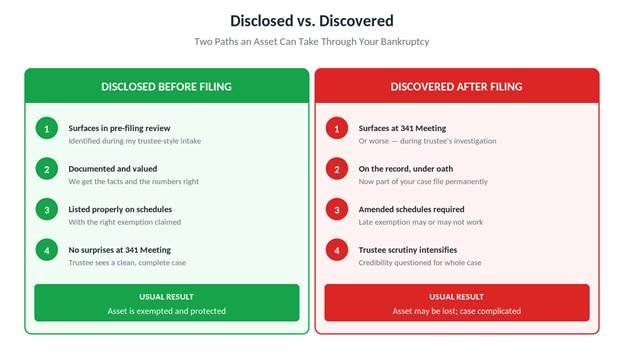
Figure 2: The same asset takes very different paths depending on when it surfaces.
I have had clients tell me, well into a consultation, things like:
- “Oh, I forgot — my grandmother left me a house I have never lived in.”
- “My ex still owes me $12,000 from the divorce.”
- “I had a slip and fall at the grocery store last year and the lawyer said it might settle for something.”
- “My cousin has my old pickup truck, but technically it is still in my name.”
Every single one of those is the kind of thing a trustee will find. Every single one of those is also the kind of thing we can plan around — if we know about it before we file.
The Other Side of the Same Skill
There is another piece of this that clients do not always think about: when you do purchase a home or a car during a Chapter 13, you need court approval. The same instincts that helped me find assets as a trustee’s attorney now help me structure purchase motions that are likely to get approved.
I know what the trustee will scrutinize in your budget. I know what the judge wants to see about the necessity of the purchase, the affordability of the new payment, and the impact on your plan. I know what kinds of vehicles tend to get approved and which ones tend to get pushed back. That kind of pattern recognition is hard to teach. You really have to have been in the room for a few thousand of these.
Honesty Is the Strategy
I want to be clear about one thing. None of this is about hiding anything. The bankruptcy system is built around full, honest disclosure, and the consequences for hiding assets can be severe — including loss of your discharge and, in extreme cases, criminal charges. My approach is the opposite of hiding. It is about disclosing everything, fully and intentionally, and then using the exemptions and planning tools the law provides to protect what can be protected.
That is what experienced trustees actually appreciate. Clean cases. Complete schedules. No surprises. When I file a case, I want the trustee to look at it and think, “This is going to be straightforward.” That is good for the trustee, and it is good for my client.
What This Means for You
If you are considering bankruptcy, the choice of attorney is not just about who can file the paperwork. It is about who can see your case the way the people on the other side of the courtroom are going to see it. That is what I bring to every case at Riggs Law Firm. You can review all of our Las Vegas debt solutions to understand how we approach every type of financial hardship.
Talk to Riggs Law Firm
If you are weighing Chapter 7 against Chapter 13 — or wondering whether bankruptcy is the right move at all — the most valuable thing you can do is sit down with an attorney who will give you a frank, honest assessment of your options.
At Riggs Law Firm, I bring more than fifteen years of bankruptcy experience to every case, including extensive work representing a chapter 13 bankruptcy trustee. That background means I see your case from both sides of the table before we ever file. Contact Riggs Law Firm to schedule a free consultation.
Call Riggs Law Firm at 702-605-5070 to schedule a consultation. We will lay out your options, answer your questions, and help you decide what fits your life.
Disclaimer: This article is for general informational purposes only and does not constitute legal advice. Reading this article does not create an attorney-client relationship with Riggs Law Firm. Every bankruptcy case is fact-specific. For advice about your particular situation, please contact a licensed Nevada bankruptcy attorney. Riggs Law Firm is a debt relief agency. We help people file for bankruptcy relief under the U.S. Bankruptcy Code.